
Understanding Rider and Horse Balance
Identifying the sources of imbalance and compensation
Learn to differentiate compensation from functional balance
If you feel that something is keeping you from reaching the relationship and performance you want with your horse, you may be struggling with compensation patterns.
Rider Factors
Putting an end to pain and position struggles
Why your pelvic interface matters
We have been there, struggling with position, tension, pain and lack of fine tuned communication. Trying to work on core fitness and hip supplying, not getting the results.
You will learn how a simple VBR assessment can identify small variations of pelvic/ hip shape, and how they dictate your posture, alignment and movement strategy, influencing your horse's response, balance, symmetry and self carriage. Your fitness strategy will change with renewed body awareness, allowing you to focus on the real challenges, revealed through VBR testing.
How pelvic shape is crucial to saddle interface impacting your position and your horse
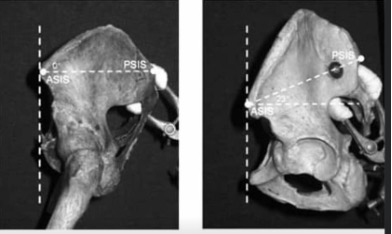
Two pelvic shapes left showing very high curvature to pubic symphysis.
Left pelvis showing high angle pubic symphysis
Right showing more common lower flatter pelvis with lower symphysis with hip joint placed lower and close to the saddle.
The left one will function with a prominent pommel offer support in the front. the right will only function with less pommel, that otherwise tips the rider back and hurt.
Horse Factors
Is your horse in the red?
This posture will compromise rideability, behaviour, tack fit and over all health.
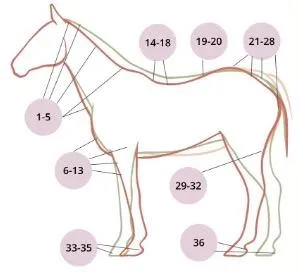
You can change your horse's topline balance, bringing it from a risky posture to a healthy topline while also improving all of the above.
VBR effectively transforms your training and rehabilitation skills through detection and observation.
Horses adapt to imbalance or painful load by utilising compensatory movement patterns. These are often mistaken for conformation traits and behaviour issues.
VBR teaches you to distinguish, observe and handle the causes of compensation.
Equipment factors
Is your harmony & performance being sabotaged?
When and your hard work is not resulting in expected progress and performance…
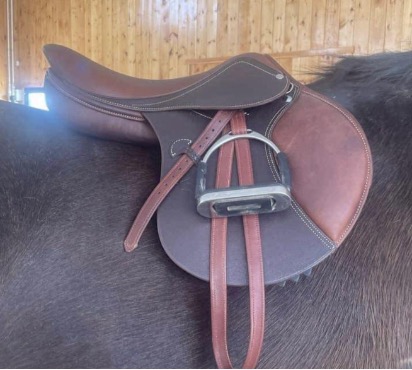
One of the most common causes of lack of progress is poor ergonomics, making even the nicest tack dysfunctional.
The saddle, bit and bridle have been scientifically proven to cause effect on:
- Posture,
- Motion patterns and
- Balance control in horses and riders.
By understanding ergonomics, body shapes and anatomical differences, we can alter both horse and rider's posture, balance and biomechanics from compensational to functional resulting in improved harmony.
Self assess you and your horse
PDF resources outline common indicators of imbalance, compensation patterns, and early warning signs.
These guides support observation and understanding but do not replace structured assessment.
VBR Topline Guide
Pelvic Saddles Guide

Understanding Rider and Horse Balance
Identifying the sources of imbalance and compensation
Learn to differentiate compensation from functional balance
If you feel that something is keeping you from reaching the relationship and performance you want with your horse, you may be struggling with compensation patterns.
Rider Factors
Putting an end to pain and position struggles
Why your pelvic interface matters
We have been there, struggling with position, tension, pain and lack of fine tuned communication. Trying to work on core fitness and hip supplying, not getting the results.
You will learn how a simple VBR assessment can identify small variations of pelvic/ hip shape, and how they dictate your posture, alignment and movement strategy, influencing your horse's response, balance, symmetry and self carriage. Your fitness strategy will change with renewed body awareness, allowing you to focus on the real challenges, revealed through VBR testing.
How pelvic shape is crucial to saddle interface impacting your position and your horse
Two pelvic shapes left showing very high curvature to pubic symphysis.
Left pelvis showing high angle pubic symphysis
Right showing more common lower flatter pelvis with lower symphysis with hip joint placed lower and close to the saddle.
The left one will function with a prominent pommel offer support in the front. the right will only function with less pommel, that otherwise tips the rider back and hurt.
Horse Factors
Is your horse in the red?
This posture will compromise rideability, behaviour, tack fit and over all health.
You can change your horse's topline balance, bringing it from a risky posture to a healthy topline while also improving all of the above.
VBR effectively transforms your training and rehabilitation skills through detection and observation.
Horses adapt to imbalance or painful load by utilising compensatory movement patterns. These are often mistaken for conformation traits and behaviour issues.
VBR teaches you to distinguish, observe and handle the causes of compensation.
Equipment factors
Is your harmony & performance being sabotaged?
When and your hard work is not resulting in expected progress and performance…
One of the most common causes of lack of progress is poor ergonomics, making even the nicest tack dysfunctional.
The saddle, bit and bridle have been scientifically proven to cause effect on:
- Posture,
- Motion patterns and
- Balance control in horses and riders.
By understanding ergonomics, body shapes and anatomical differences, we can alter both horse and rider's posture, balance and biomechanics from compensational to functional resulting in improved harmony.
Self assess you and your horse
PDF resources outline common indicators of imbalance, compensation patterns, and early warning signs.
These guides support observation and understanding but do not replace structured assessment.
VBR Topline Guide
Pelvic Saddles Guide
Contact us